Web Design · Washington
Custom Website Design in Washington
Sites designed around the search architecture and conversion path first, then made beautiful.
- Years in search
- 10+
- Washington-specific issues
- 3
- Main cities covered
- 4
- Business analysis first
- Free
This market
Why this looks different in Washington
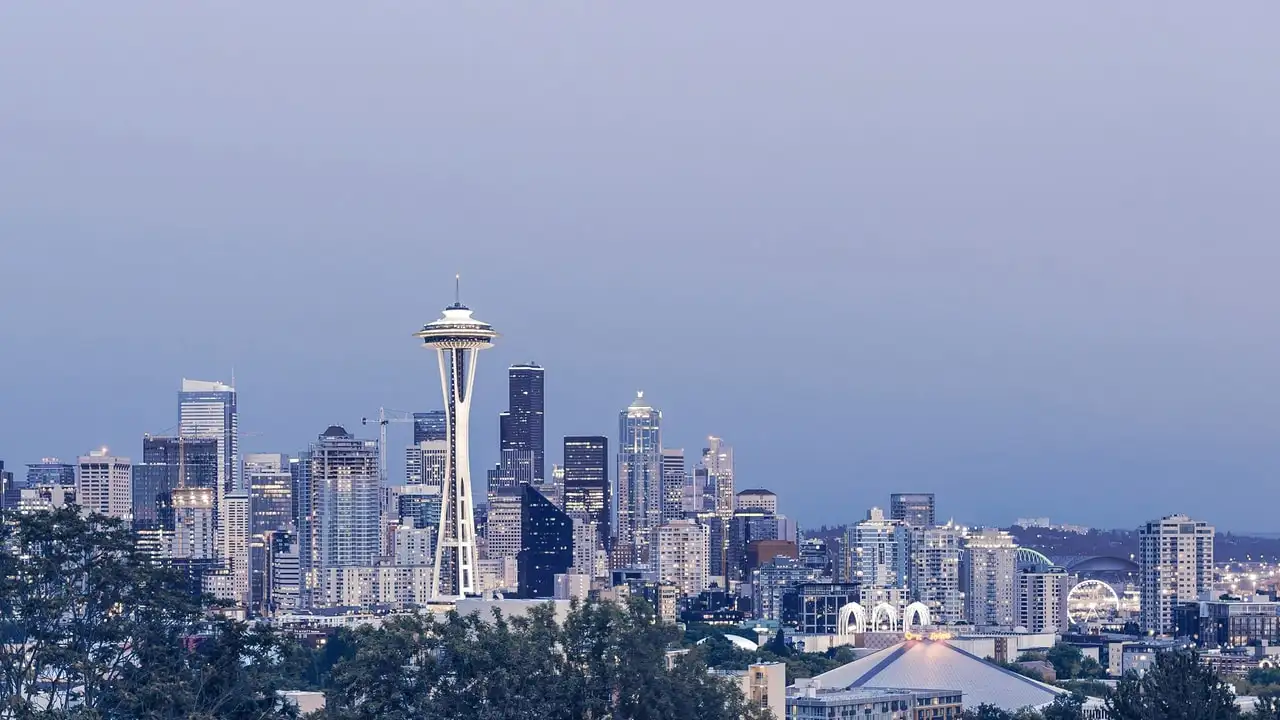
Washington shares California's dominant build risk for the same reason — a technology sector whose engineering preferences propagate into every category — but the stakes here are arguably higher, because this market has the earliest-adopting buyers we work with. A client-rendered site whose content AI retrieval systems cannot read is invisible to the surface your buyers were using before most of the country had heard of it.
The second Washington-specific inventory requirement is an Eastside branch. Lake Washington is a genuine market boundary — the bridges are real bottlenecks and Bellevue, Kirkland and Redmond are searched as their own market — so a Seattle page cannot cover them. That branch has to exist in the page map from the start, not appear as a service-area sentence after launch.
Washington specifics
What actually gets in the way here
These are conditions particular to this market. If they were true everywhere, they would not be worth a page.
-
Local condition 01 Specific to Washington, not true everywhere
Client-rendered builds in a market of early AI adopters
Washington sites default to JavaScript applications while Washington buyers adopted generative research first. The mismatch means content that ranks conventionally can be entirely absent from the surface those buyers consult.
-
Local condition 02 Specific to Washington, not true everywhere
No Eastside branch in the page inventory
Bellevue, Kirkland and Redmond are a distinct market a Seattle listing cannot reach. A design without a location branch for them leaves the most commercially dense part of the region uncovered.
-
Local condition 03 Specific to Washington, not true everywhere
Seasonal content with no editable structure
Washington's short summer window requires seasonal service information to be published and updated quickly. Sites needing developer involvement for that miss the window entirely.
Our approach
How we run Custom Website Design in Washington
The same four stages we run everywhere, applied to this market's conditions. The sequence matters more than any individual tactic.
Step 01 Goals, audience and page inventory
We establish what the site must achieve commercially, who arrives and from where, then produce the full page inventory and URL map. Every subsequent decision refers back to this document, and every stakeholder disagreement surfaces here where it is cheap.
Step 02 Structure and design system
Wireframes for each template against real content, then the visual system: type scale, colour tokens with contrast verified, spacing, and component states. We design templates rather than pages, so the hundredth page looks as considered as the first.
Step 03 Build to budget
Development against the performance and accessibility targets set at kickoff, with the content model wired so your team can edit safely. Search fundamentals — schema, canonicals, sitemap, heading hierarchy — are part of the build rather than a follow-up ticket.
Step 04 Launch with redirects and measurement in place
Full redirect mapping from the old site verified before launch, analytics and conversion tracking configured, and post-launch indexation monitored for the first month. A launch without a verified redirect map is the most common cause of a site losing its own traffic.
Before you start
Three things worth knowing in Washington
Local tip
Ask whether your content pages will be present in the HTML response before approving any technical approach. In Seattle this is the single question that prevents the most expensive architectural mistake available, and it is far easier to ask at kickoff than to diagnose a year in.
How we would measure it
Measured on server-rendered content verified per template, indexation across Seattle and Eastside branches separately, interaction delay in field data, and conversion per template against baseline.
What this costs in Washington
From $1,500
Washington custom sites run $9,000–$34,000, reflecting the engineering standard this market expects and the rendering architecture required. A genuine Eastside branch is an additional template rather than a separate project.
See the Website Development planProof
What we can stand behind
One documented client result, two facts about how we work, and the market data explaining the conditions Custom Website Design operates in. Each figure is labelled with what it is.
- Documented client result 84%
Organic traffic increase in 3 months
- Company history 10+
Years running search and paid campaigns
- Service model 3
Disciplines under one roof — SEO, paid media, web design
The 84% figure is a documented result for a single client, not a projection of typical performance in this market. The market figures are published statistics from the sources named, included because they explain the environment rather than because they are our results.
See the before-and-after data: our fence contractor SEO case study
Nearby markets
Custom Website Design in markets adjacent to Washington
Adjacent markets are not interchangeable — each of these pages is written around that market's own competitive conditions.
- Custom Website Design in Texas Houston, Dallas, Austin
- Custom Website Design in California Los Angeles, San Francisco, San Diego
- Custom Website Design in Illinois Chicago, Naperville, Aurora
- Custom Website Design in St. Petersburg, FL St. Petersburg, Gulfport, Pinellas Park
- Custom Website Design in Tampa, FL Tampa, Temple Terrace, Brandon
- Custom Website Design in Florida Tampa, St. Petersburg, Orlando
- Custom Website Design in New York New York City, Buffalo, Rochester
What usually runs alongside this in Washington
- Technical SEO in Washington Crawl, render, index and speed problems diagnosed and fixed — the ceiling every content strategy hits eventually.
- Website Redesign in Washington A rebuild that keeps every ranking, redirect and conversion path you already earned.
- Landing Page Design in Washington One promise, one action, message-matched to the ad that sent the click — and instrumented so you learn something.
Every other service in Washington
- Local SEO
- Website SEO
- AI SEO
- Social Media Management
- App Design
- Google Ads
- Social Media Ads
- PPC Management
See the Custom Website Design overview or everything we do in Washington.
Custom Website Design in Washington, answered
Why does rendering strategy matter especially for a Washington business?
Because of an unfortunate alignment between how sites here are built and how buyers here search. The Seattle and Eastside technology concentration means sites across every category are disproportionately client-rendered JavaScript applications, with a meaningful share of content existing only after script execution — and this market has the earliest-adopting audience we work with, using generative assistants for research well before the general population. Those retrieval systems frequently do not execute JavaScript at all. So a Washington business can rank perfectly well conventionally while being entirely absent from the surface its buyers actually consult. For a technology-adjacent company selling to technology buyers, that is a particularly bad place to be invisible. The decision — content pages server-rendered, interactive areas client-side — costs nothing at kickoff and requires a rebuild afterwards.
What does an Eastside branch need to look like in the page inventory?
Its own location pages with genuinely distinct content, not a service-area mention on a Seattle page. Lake Washington is a real market boundary: the bridges are genuine bottlenecks, the travel time means Eastside residents do not cross for routine services, and a Seattle-registered Google Business Profile will not hold position in Bellevue for competitive consumer categories. So there is no profile-side compensation available — if there is no indexed page substantively about serving the Eastside, you are absent from that market. Given how affluent and commercially dense the Eastside is, with its substantial technology and professional services base, this is usually among the most valuable content missing from a Washington site. Designing the branch in from the inventory stage gives it a proper template, correct schema and a real position in the internal link graph.
How should the content model handle Washington seasonality?
By making seasonal service information publishable and editable without a developer, because the window is short and the pressure is high. Washington's pattern is a long winter followed by a compressed summer producing sharp demand in landscaping, roofing, home improvement and recreation — and during that window the business is operating at capacity, so anything requiring a support ticket simply does not happen. The content model needs seasonal availability, service offerings and scheduling information as editable fields on the relevant templates, updatable from a phone. There is also an inventory-level implication: the seasonal service pages themselves need to exist and be indexed through the winter, because content published during the summer window ranks after it closes. Both are design decisions that do not appear in a mockup and determine whether the site works in July.
What performance standard should a Washington site be built to?
A budget set at kickoff and enforced on every build, with particular attention to what ships before the page becomes interactive. The typical Washington failure is a framework-heavy build with a substantial JavaScript bundle that must download, parse and execute first — fast enough on a developer machine to score acceptably in a lab test, noticeably delayed for a real user on a mid-range phone. Interaction delay is the vital that correlates most directly with abandonment, so this costs completed forms rather than just position. Practically: code splitting, deferred non-critical scripts, critical content in the server response, self-hosted subset fonts, and third-party tags justified individually. Framing it as a conversion issue rather than an SEO one usually makes engineering time easier to obtain, which matters in a market where the engineering team has strong opinions.
Coverage area
Serving Washington and Surrounding Neighborhoods
Our team works from St. Petersburg, FL, and covers Washington alongside the surrounding communities below.
Neighborhoods and communities we cover
- Downtown Seattle
- Capitol Hill
- Ballard
- Fremont
- Downtown Bellevue
- Tacoma Waterfront
Zip codes served
- 98101
- 99201
- 98402
- 98004
Start with the page map, not the mockup in Washington
Tell us what the site needs to achieve and we will send back a first-pass page inventory and URL structure. It is the most useful document in a website project and almost nobody produces it.