Web Design · St. Petersburg, FL
Landing Page Design in St. Petersburg, FL
One promise, one action, message-matched to the ad that sent the click — and instrumented so you learn something.
- Years in search
- 10+
- St. Petersburg-specific issues
- 3
- Main cities covered
- 4
- Business analysis first
- Free
This market
Why this looks different in St. Petersburg
St. Petersburg landing pages have to solve a message-match problem most markets do not: half your traffic may not know where anything is. Winter residents and visitors clicking a St. Pete ad have no mental map of Old Northeast, Gateway or the Grand Central District, so a headline referencing a neighbourhood tells them nothing — while for a year-round resident that same neighbourhood reference is the strongest possible relevance signal.
That means running two page variants rather than one for most local campaigns here, split by the audience the ad set is actually reaching. It is a small amount of extra production and it resolves the single largest source of wasted spend we see in this market: a page whose first screen is spent making half its visitors work out whether they are in the right place.
St. Petersburg specifics
What actually gets in the way here
These are conditions particular to this market. If they were true everywhere, they would not be worth a page.
-
Local condition 01 Specific to St. Petersburg, FL, not true everywhere
Location references that mean nothing to half the audience
A headline referencing Snell Isle or the Edge District is a strong relevance signal to a resident and meaningless to a winter visitor. One page cannot carry both, and the mismatch is spent in the first two seconds.
-
Local condition 02 Specific to St. Petersburg, FL, not true everywhere
Seasonal cost swings that flat campaigns absorb badly
St. Pete auction pressure rises with the winter influx in visitor-facing categories. Pages and budgets planned flat overspend in the quiet months and are under-resourced when demand peaks.
-
Local condition 03 Specific to St. Petersburg, FL, not true everywhere
Phone conversion undervalued in the page design
St. Pete local businesses convert heavily on calls, yet landing pages routinely put the form first and the number in the footer, which suppresses the conversion path the audience actually prefers.
Our approach
How we run Landing Page Design in St. Petersburg, FL
The same four stages we run everywhere, applied to this market's conditions. The sequence matters more than any individual tactic.
Step 01 Offer, audience and promise
We establish exactly what is being offered, to whom, at what stage of awareness, and what specific promise the traffic source is making. That promise becomes the page's headline, so this step determines the page rather than describing it.
Step 02 Structure the argument
We sequence the page as an argument: promise, then how it works, then proof, then objection handling, then the action — with the action repeated at each point where a reader might be convinced. Structure is decided before any visual design.
Step 03 Build lean and instrument fully
Development with a hard performance constraint, tracking configured before launch rather than after, and form analytics in place so the first week of traffic produces data rather than just outcomes.
Step 04 Test what is actually uncertain
Testing prioritised by uncertainty and traffic volume — headline and offer first, since they carry the most variance, cosmetic elements last or never. We are explicit about what your traffic volume can and cannot resolve statistically.
Before you start
Three things worth knowing in St. Petersburg
Local tip
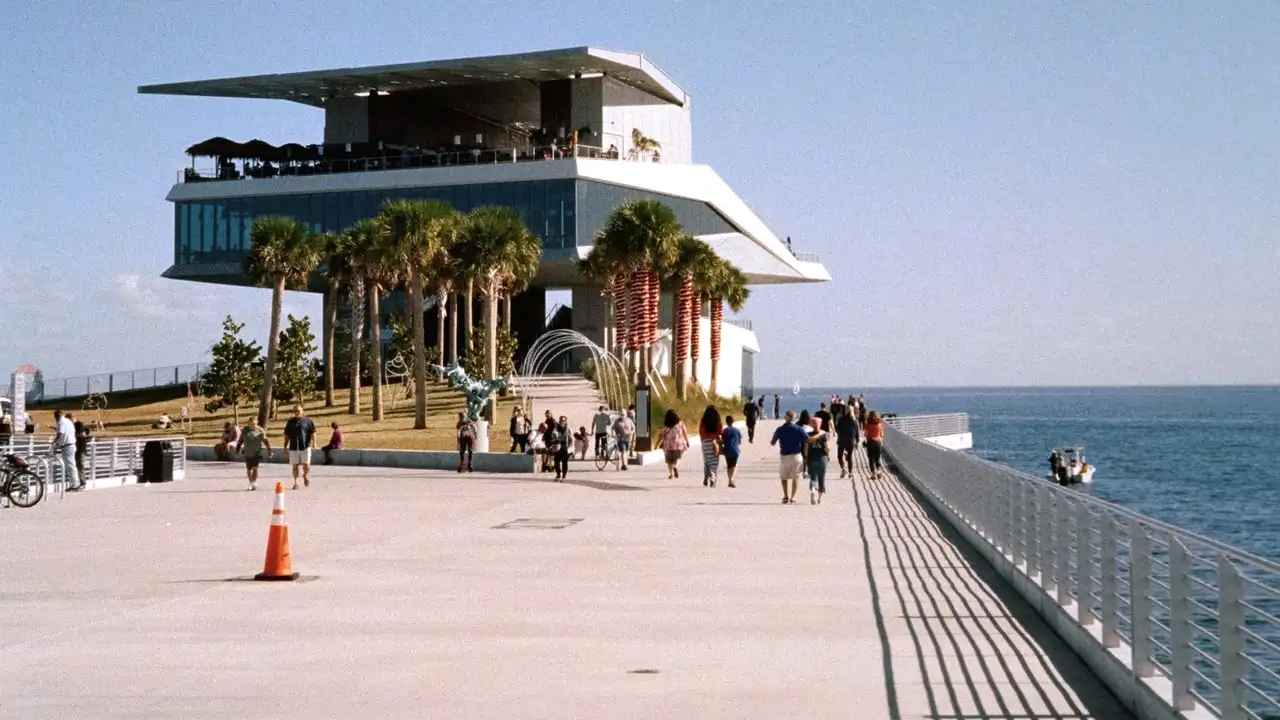
Reference a landmark rather than a neighbourhood on the visitor-facing variant — the Pier, the waterfront, downtown — because those are the only geographic anchors a winter arrival actually has. Neighbourhood names belong on the resident variant.
How we would measure it
Measured on cost per qualified enquiry with calls and form submissions tracked separately, and variants compared within the same season rather than across seasons where the audience mix has shifted.
What this costs in St. Petersburg
From $1,500
St. Pete landing pages run $2,200–$7,000. A two-variant seasonal set costs meaningfully less than double, because the structure, tracking and system are shared and only the messaging and imagery differ.
See the Website Development planProof
What we can stand behind
One documented client result, two facts about how we work, and the market data explaining the conditions Landing Page Design operates in. Each figure is labelled with what it is.
- Documented client result 84%
Organic traffic increase in 3 months
- Company history 10+
Years running search and paid campaigns
- Service model 3
Disciplines under one roof — SEO, paid media, web design
The 84% figure is a documented result for a single client, not a projection of typical performance in this market. The market figures are published statistics from the sources named, included because they explain the environment rather than because they are our results.
See the before-and-after data: our fence contractor SEO case study
Nearby markets
Landing Page Design in markets adjacent to St. Petersburg
Adjacent markets are not interchangeable — each of these pages is written around that market's own competitive conditions.
- Landing Page Design in Tampa, FL Tampa, Temple Terrace, Brandon
- Landing Page Design in Florida Tampa, St. Petersburg, Orlando
- Landing Page Design in Texas Houston, Dallas, Austin
- Landing Page Design in California Los Angeles, San Francisco, San Diego
- Landing Page Design in Illinois Chicago, Naperville, Aurora
- Landing Page Design in New York New York City, Buffalo, Rochester
What usually runs alongside this in St. Petersburg, FL
- Custom Website Design in St. Petersburg, FL Sites designed around the search architecture and conversion path first, then made beautiful.
- Google Ads in St. Petersburg, FL Search campaigns optimised toward qualified leads and revenue, not clicks and impression share.
- PPC Management in St. Petersburg, FL One operator across every paid channel, allocating budget on evidence rather than on which platform had a good month.
Every other service in St. Petersburg, FL
- St. Petersburg FL SEO
- Website SEO
- AI SEO
- Technical SEO
- Social Media Management
- App Design
- Website Redesign
- Social Media Ads
See the Landing Page Design overview or everything we do in St. Petersburg.
Landing Page Design in St. Petersburg, answered
Why do St. Pete campaigns often need two landing page variants?
Because the audience genuinely splits, and message match works differently for each half. A year-round resident clicking your ad recognises Old Northeast, Kenwood or the Grand Central District immediately, and a headline referencing their neighbourhood is the strongest relevance signal available — it says you are near them and you know the area. A winter resident or visitor has no mental map of any of that, so the same headline costs them the first two seconds working out whether they are in the right place, which is exactly the attention you paid for. Running two variants split by ad set is a modest amount of extra production and resolves the largest single source of wasted spend we see in this market. Which variant runs heavier shifts across the year, which is a targeting decision rather than a page one.
Should a St. Pete landing page lead with a form or a phone number?
Both, with the phone genuinely prominent rather than relegated to a footer, because local businesses here convert heavily on calls and most landing pages are built as though they do not. The pattern we see repeatedly is a well-designed form occupying the first screen with the phone number in small text at the bottom, which suppresses the conversion path a meaningful share of the audience would prefer — particularly older winter residents, who are a real demographic in this market and reach for the phone first. The right treatment is a tappable number visible without scrolling on mobile, alongside a short form for people who prefer that, with call tracking wired so you can actually see which one is producing enquiries rather than guessing.
How should seasonality affect landing page and budget planning here?
Both should be paced against the demand curve rather than held flat, because St. Pete visitor-facing categories see genuine volume and cost swings through the winter season. A flat monthly budget systematically overspends in the quiet late-summer months when the same dollar buys less qualified traffic, and is under-resourced during the period when demand and auction pressure are both highest. On the page side, the seasonal variant that serves visitors should be built and tested before the season starts rather than during it, so you are not iterating on a new page while paying peak prices for the traffic hitting it. This usually means an uneven monthly budget, which is frequently a harder internal conversation than the media strategy itself.
What should we test first on a St. Pete landing page?
The headline and offer, and honestly, for many businesses here that is where testing should stop. The arithmetic is unforgiving: detecting a modest improvement reliably needs hundreds of conversions per variant, and a St. Pete local business running a few hundred clicks a month cannot resolve a small difference before the season, the market or the campaign has changed underneath the test. So test the things with enough variance to show quickly — the offer itself, the headline, whether the page leads with the phone or the form — and treat button colours and layout micro-decisions as judgment calls made against established principles rather than experiments. We would rather tell you your volume cannot support a test than run one that produces a number nobody should act on.
Coverage area
Serving St. Petersburg, FL and Surrounding Neighborhoods
Our team works from St. Petersburg, FL, and covers St. Petersburg, FL alongside the surrounding communities below.
Neighborhoods and communities we cover
- Downtown St. Pete
- Old Northeast
- Historic Kenwood
- Grand Central District
- Snell Isle
- Shore Acres
Zip codes served
- 33701
- 33702
- 33703
- 33704
- 33705
- 33712
- 33713
- 33714
- 33715
- 33716

Stop paying for clicks your page talks past in St. Petersburg, FL
Send us a campaign and its landing page and we will tell you where message match breaks, where the form leaks, and what we would test first given your actual traffic volume.